| Blessings | Good fortune and lasting connections |
|---|---|
| What you need | A sushi roll in a comfortable portion |
Face the Lucky Direction and Eat Ehomaki for Good Fortune / 🇯🇵 Japan
Face the year’s lucky direction on Setsubun and eat an ehomaki with a wish in mind. This Japanese sushi-roll tradition wraps up good fortune and lasting connections in a quiet, delicious welcome to spring.
Blessings
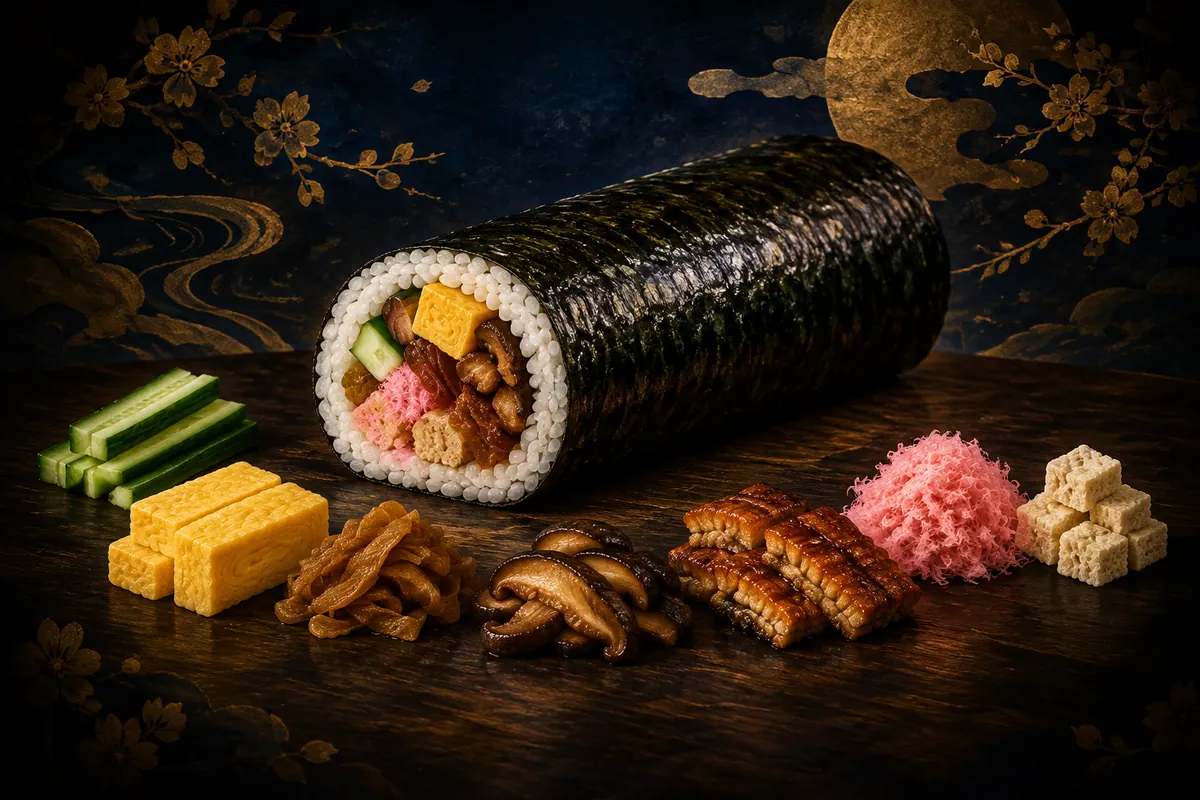
Ehomaki is a sushi roll with a wish for the coming season inside it. Eho means the fortunate direction for that year; facing it gives the meal its distinctive ritual. The unbroken roll carries another hopeful image: keeping the connections you treasure intact.
Seven fillings are a popular choice, linking the meal with Japan’s Seven Lucky Gods. Omelette, cucumber, simmered gourd and shiitake mushrooms add colour and texture. A small roll that you can comfortably finish is a lovely way to take part and enjoy every bite.
How to invite good fortune
- Prepare seasoned sushi rice, nori and fillings cut into long, thin pieces.
- Lay the nori on a rolling mat, spread the rice while leaving a border at the far edge, add the fillings and roll.
- On Setsubun, turn towards that year’s lucky direction.
- Bring your wish to mind and enjoy the roll quietly, chewing slowly and comfortably.
For children, cut the nori and fillings into small, easy-to-eat pieces. Adults can choose a comfortably sized roll too. Let the meal be an enjoyable moment for the good things you want to welcome.
Find products
Affiliate links — we may earn a commission when you buy through these links.
Origins and history
Whole-roll eating is closely associated with Osaka and the wider Kansai region. Before ehomaki became the familiar name, descriptions such as marukaburi-zushi highlighted the way the roll was eaten. A seasonal meal became an opportunity to welcome spring with a personal wish.
Wrapping the fillings in rice and seaweed suggested gathering good fortune inside. The seven-filling version drew on the Seven Lucky Gods, while the uncut form carried a wish for continuing ties. Promotion by the nori trade and food retailers helped the custom spread across Japan. Today, seafood rolls, vegetable combinations and smaller portions give that seasonal tradition many appetising forms.