| Blessings | Wish fulfilment and good fortune |
|---|---|
| What you need | Nothing needed |
Take a Lucky Flight to Fushimi Inari for Good Fortune at the Omokaru Stones / 🇯🇵 Japan
Welcome to Kyoto
ITMLocal time
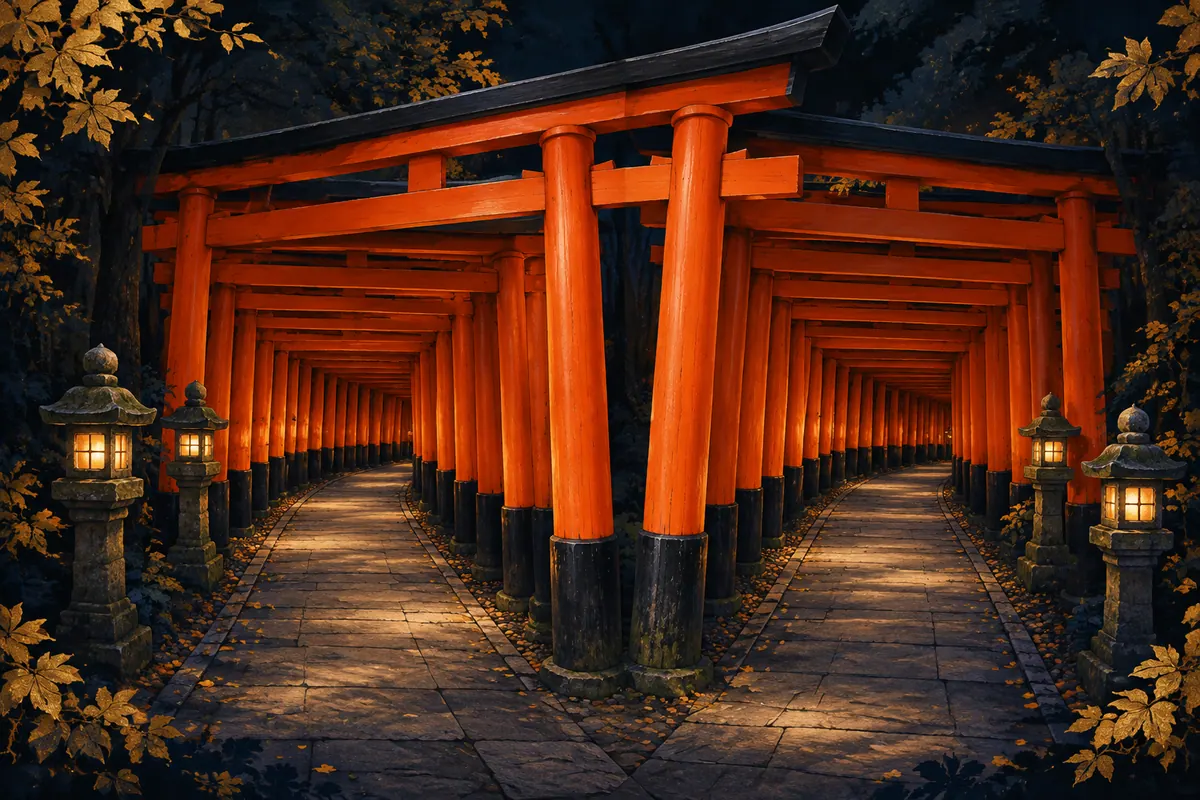
Take a Lucky Flight to Fushimi Inari and bring a wish for good fortune to the Omokaru Stones. A stone that feels lighter than expected carries the happy sign of a wish coming true. Follow the vermilion torii toward this intimate wish-making place.
Look around the destination
Blessings
Let a rounded stone give your wish a little focus. Behind Fushimi Inari's Okusha worship place stand two stone lanterns. Visitors bring a wish to mind, lift a lantern's top and compare its weight with what they expected. Feeling it lighter is the welcome sign associated with fulfilment.
This Lucky Flight takes your attention beyond the famous torii to a smaller, more personal encounter. Choose one aim from your work or everyday life and put it into a short sentence. The setting invites you to pause with that intention, rather than rush through a whole list. Keep the wish simple enough to carry with you when you return to the rest of your day.
How to invite good fortune
Open the shrine's official grounds guide and find Okusha, reached after passing through the Senbon Torii. Look for the pair of stone lanterns behind it on the right. Take a slow breath and settle on the wish you want to bring to this visit.
The local custom is to lift a lantern's rounded top while thinking about the wish, then notice how the weight compares with your expectation. Follow the shape of the stone and the sequence of the gesture in the guide or images. Offer your own intention quietly and spend the final minute directing your thoughts toward Mount Inari. Add your arrival stamp when the visit is complete. Before moving on, choose one step you would like to take toward your goal.
Three minutes of prayer3:00
Saved on this device
Origins and history
Okusha is a place for worshipping the mountain from afar. Mount Inari's three peaks lie behind its sanctuary, extending the journey beyond the gates into the mountain itself. The place is also known as Okuin, a name already present in an old shrine record of a sanctuary transfer.
Its buildings changed through fire and rebuilding in the Edo period. A later move set the sanctuary farther back and created space for worship in front. Through those changes, the mountain remained the direction of prayer.
The Omokaru Stones bring that grand setting down to the scale of a person's hands. Beyond the sweeping rows of torii, a simple lifting gesture connects expectation with a cherished wish. That contrast gives the visit its special warmth.