| Blessings | Protection and a peaceful winter |
|---|---|
| What you need | Adzuki beans or prepared patjuk, Glutinous rice flour for the small balls |
Eat Red Patjuk at the Winter Solstice for Protection / 🇰🇷 South Korea
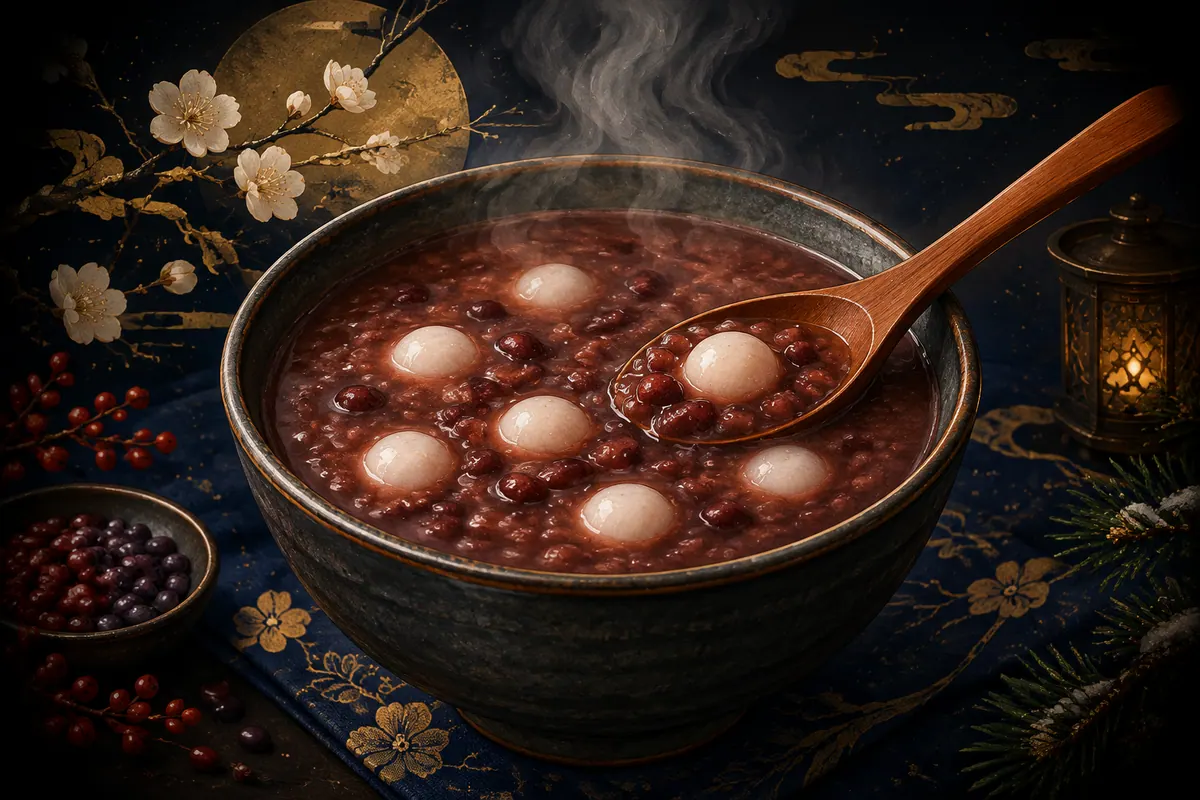
Eat a warm bowl of Korean patjuk at the winter solstice and wish your home protection. Deep red adzuki porridge and small rice balls turn the longest night into a welcoming meal shared with people you love.
Blessings
Give the longest night a warm red centre. Patjuk is a Korean adzuki-bean porridge associated with Dongji, the winter solstice. The red colour has a traditional meaning of protection, and a bowl at the table brings that wish into the most welcoming part of the evening: a meal together.
Small balls made from rice dough add a pleasantly chewy contrast to the cooked beans. Their pale shapes stand out against the deep red porridge. Serve it when you want to mark the change of season and wish the household a peaceful winter. The dish's colour does the storytelling, while the warmth and texture make it something you will want to taste.
How to invite good fortune
Prepare the porridge using a patjuk recipe or choose a ready-made version. For the homemade method, cook the adzuki beans until soft and blend or mash them to form the porridge base. Keep the bean liquid as needed for the recipe so the mixture becomes smooth and spoonable.
Make a soft dough with glutinous rice flour and shape it into small balls. Cook them thoroughly in the bean base as directed by the recipe, then serve the porridge hot in bowls. If you are using a prepared product, follow its heating instructions. Enjoy the rice balls slowly with the smooth red beans.
At the winter solstice, share the meal and wish everyone at the table a peaceful season. Let the bowl carry the custom's protective symbolism and the evening carry the warmth. You can explain why the red colour matters before passing the bowls around. A seasonal moment that happens outside, the year's shortest daylight, becomes a comfortable and memorable event indoors.
Find products
Affiliate links — we may earn a commission when you buy through these links.
Origins and history
Dongji is the point in the solar year with the shortest daylight. In older Korean households, red bean porridge was used in winter-solstice rites: bowls could be offered in honour of household deities or ancestors before the food was shared with the family. The red colour came to express keeping harmful influences away, giving a simple porridge a prominent place in the winter customs.
The day was also called the Little New Year, and an old saying linked eating a bowl of patjuk with becoming a year older. The food remains a recognisable way to mark Dongji even as the surrounding practices have changed. You can see the reason for its lasting appeal in the bowl itself: dark red beans, pale rice balls and a shared wish for the days ahead.