| Blessings | Good health, long life and New Year fortune |
|---|---|
| What you need | Soba noodles, Soba broth or dipping sauce, Your choice of toppings |
Eat New Year’s Eve Soba for Health and Long-Life Luck / 🇯🇵 Japan
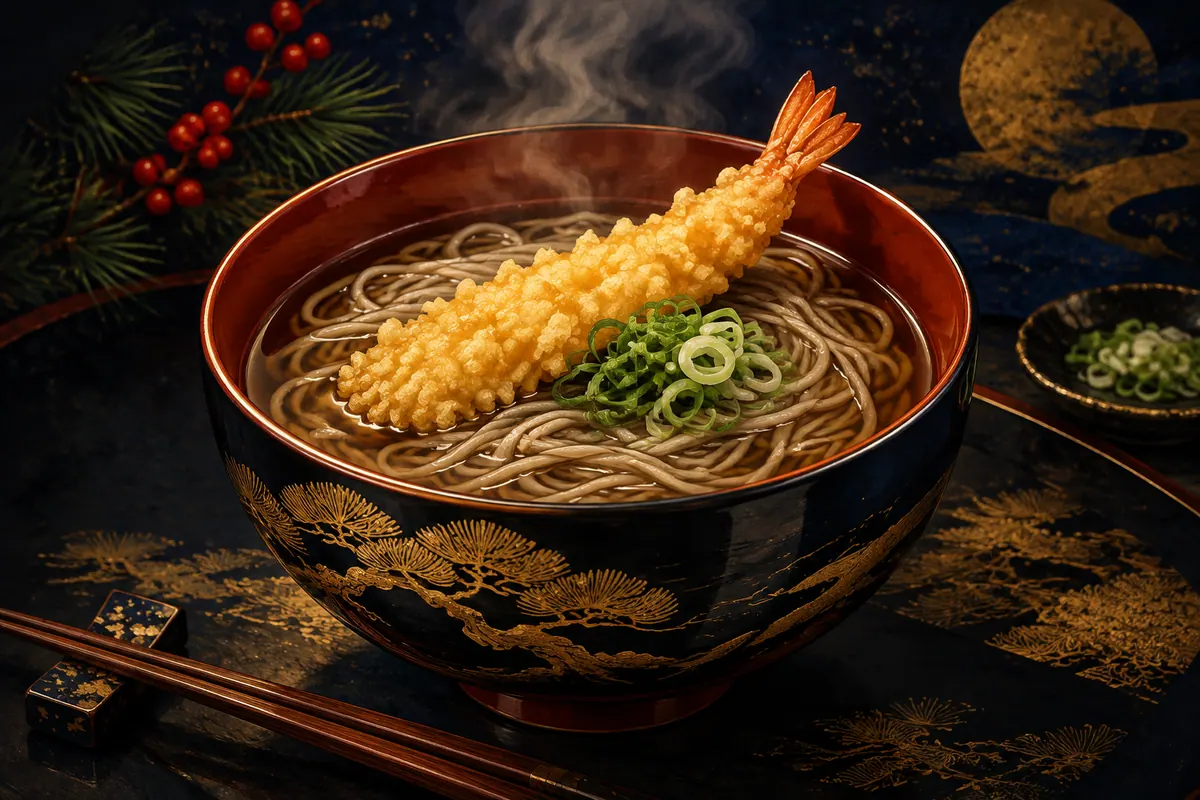
Eat a bowl of long soba noodles on December 31 and welcome health and a long, happy life. Japan’s New Year’s Eve tradition puts a hopeful meaning into a wonderfully comforting meal.
Blessings
Toshikoshi soba is the Japanese bowl for crossing into a new year with a wish for health and longevity. The noodles’ long, slender shape gives that wish a delicious form. Share the meal with someone dear or make a quiet bowl for yourself: the final evening of the year becomes a moment to welcome good things ahead.
Serve the noodles in hot broth or chilled with a dipping sauce. Spring onion, tempura or slices of fish cake can add colour and texture. You can make the occasion as simple or as celebratory as your evening feels.
How to invite good fortune
- Plan your bowl for dinner or a late meal on December 31, before midnight.
- Boil the noodles in a large pan with plenty of water. After cooking, rinse them in cold water to wash away the surface starch.
- For a warm bowl, heat the broth separately and bring noodles, broth and toppings together. For chilled soba, drain well and serve with a dipping sauce.
- Enjoy the long noodles with a wish for a healthy, flourishing life.
Dried soba and prepared tsuyu make this an approachable home tradition. Choose a garnish you enjoy and give yourself time to sit down with the bowl. Its place at the end of the year brings the special meaning.
Find products
Affiliate links — we may earn a commission when you buy through these links.
Origins and history
The custom became established in everyday life during the Edo period. Long noodles suggested a long life, and the year’s last meal offered a natural occasion to share that hope. Names such as “longevity soba” and “fortune soba” capture the cheerful wishes people placed around the bowl.
Another story connects buckwheat flour with goldsmiths, who used it to gather scattered gold dust. That association gave soba an extra gleam as a food for prosperity. The plant’s ability to recover after rough weather also became a symbol of resilience. Regional bowls add their own character, from Kyoto’s herring-topped soba to tempura versions. The meaning stays close to home: enjoy familiar food at a turning point and wish the people around your table a long, happy future.