| Blessings | Good fortune and clarity about a personal wish |
|---|---|
| What you need | Nothing needed |
Take a Lucky Flight to Wong Tai Sin and Wish for Good Fortune / 🇨🇳 China
Welcome to Kowloon, Hong Kong
HKGLocal time
Take a Lucky Flight to Wong Tai Sin Temple and bring a wish for good fortune. Discover the bamboo-stick divination that draws visitors to this Hong Kong shrine, then spend three minutes with its colourful courtyards and your own hope for the future.
Look around the destination
Blessings
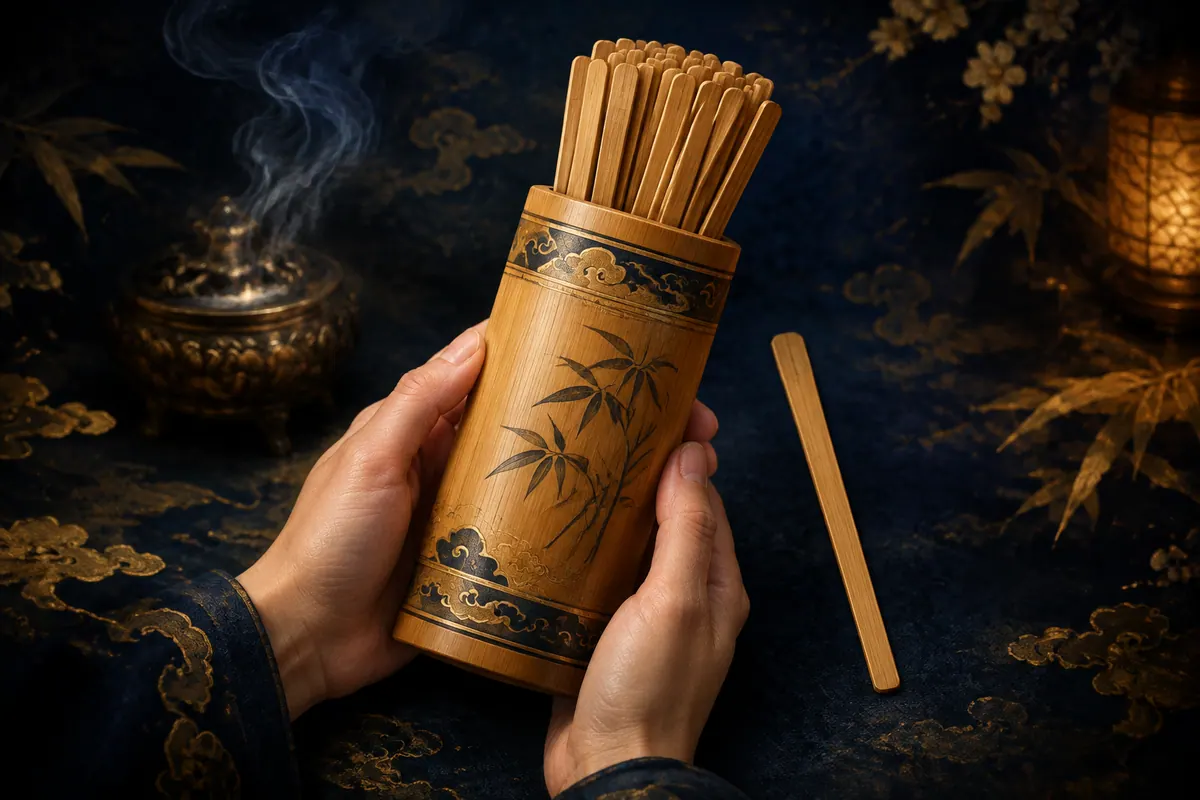
Give one wish a little space in a place filled with other people's hopes. Wong Tai Sin Temple is one of Hong Kong's best-known destinations for seeking blessings. Its bamboo-stick divination, kau cim, makes that search especially memorable: a cylinder is shaken until a stick falls, and its number leads to a reading.
This Lucky Flight takes you into the colourful setting of the custom. Watch the bright architecture and the people who come to pray. Choose the wish you want to bring with you, and let the scene help you give it your attention for a few unhurried moments.
How to invite good fortune
Open the temple footage or the official visitor guide and look towards the main worship area. Notice the colour of the buildings, the courtyards and the way visitors move through the place. Settle into the view and bring one question or wish clearly to mind.
Discover the local practice of kau cim. At the temple, a visitor shakes a bamboo cylinder until a numbered stick falls; the number is then used for a reading. Follow that action in the destination's images and keep your own wish in mind as you watch. The bamboo cylinder and the temple setting belong to the real on-site custom.
Spend the last part of your three-minute visit with the scene as a whole. Let your question become a clear thought you can carry away, then add the arrival stamp to the passport on this device. The stamp records the destination where you paused and the tradition you took time to discover.
Three minutes of prayer3:00
Saved on this device
Origins and history
Wong Tai Sin means the Great Immortal Wong, the figure to whom the temple is dedicated. The shrine brings together Taoist, Buddhist and Confucian traditions, making its religious setting richer than a single visitor activity. Its courtyards, roofs and places of worship give that living history a visible form.
The practice of kau cim adds a personal rhythm to the grand surroundings. Someone arrives with a question, the bamboo sticks move inside their cylinder, and one number becomes the starting point for interpretation. That small sequence helps explain why the temple remains such a compelling place to watch. Behind the colour and busy visitor scene are many individual hopes, each given a moment of attention in the same shared space.