| Blessings | Prosperity and family harmony |
|---|---|
| What you need | Cooked sweet pongal, Small bowls |
Share Sweet Pongal for Prosperity at Home / 🇮🇳 India
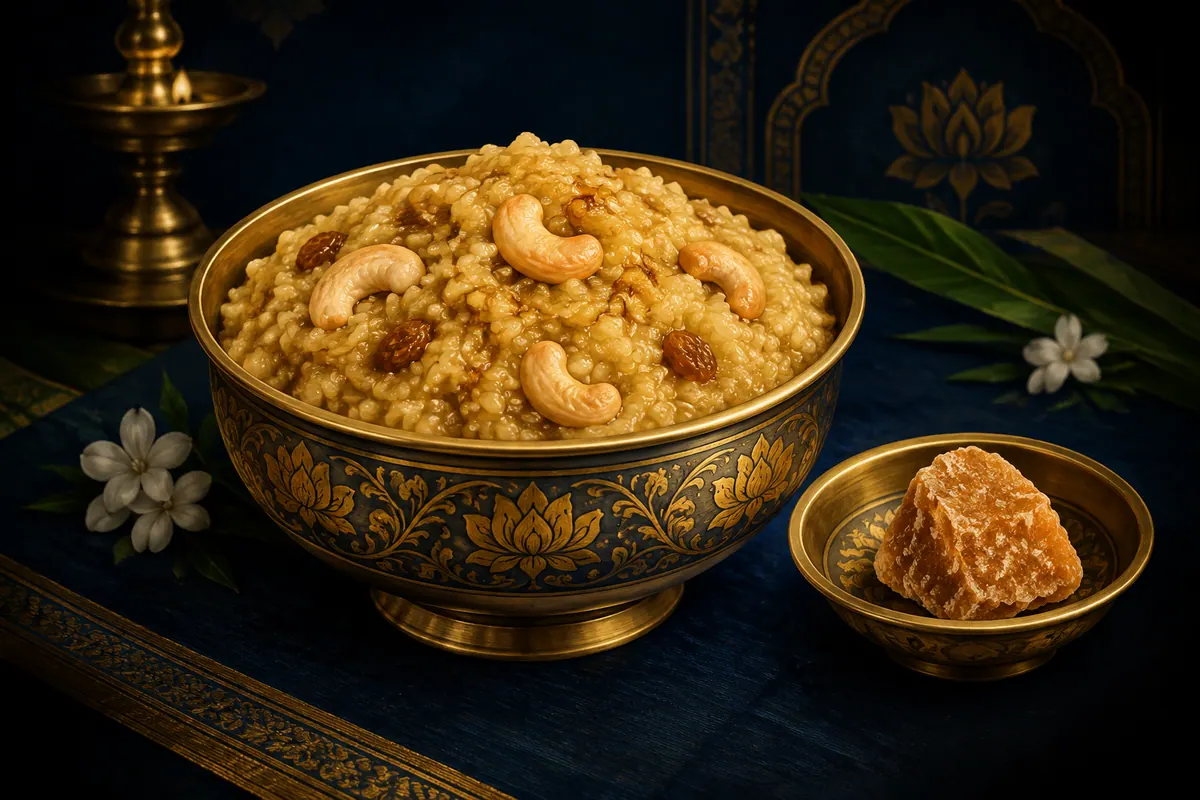
Share a bowl of sweet pongal and wish for prosperity and family harmony. The harvest festival of Tamil Nadu turns a pot of rice into a way of giving thanks.
Blessings
Set a warm bowl of sweet pongal in the middle of a table. Before you serve it, think about what it took for the rice to get there, from the field to the kitchen and then to the people sitting beside you. Pongal is a harvest celebration in Tamil Nadu, and the rice dish that shares its name gives you something practical to bring to a gathering. Choose the sweet kind, known as sakkara pongal, when you want to serve it as a treat. It can mark a family meal in January or an occasion on which you have a reason to thank the people who helped you get through a busy season.
How to invite good fortune
- Prepare sweet pongal using a recipe you know, or set out a portion that is ready to serve. Look for the sweet sakkara pongal rather than the savoury dish called venn pongal.
- Set out small bowls and share the cooked dish while it is pleasantly warm. In a home kitchen, a pan with enough space above the rice is the practical choice.
- Give the first bowl to someone you would like to thank. Tell them about one specific thing they did, then wish them a year of plenty.
- Share the rest of the dish and let everyone name one thing they would like to bring to the table again next year.
Find products
Affiliate links — we may earn a commission when you buy through these links.
Origins and history
The Tamil word pongal is connected with spilling over. During the harvest celebration, the sight of rice boiling up in a pot is a sign of plenty. The festival spans four days, and the day dedicated to the sun includes offerings of milk and jaggery. Sakkara pongal is the sweet variety of a dish that has more than one form in Tamil cooking. The celebration gives the meal a wider meaning: rice is an ingredient people eat on ordinary days, and here it becomes a way to recognise the work of the harvest. At home you can keep that idea by serving a bowl and saying whose effort made the meal possible.