| Blessings | Keeping good luck and welcoming protection |
|---|---|
| What you need | A wooden object or piece of furniture |
Knock on Wood to Keep Good Luck Going / 🇺🇸 USA
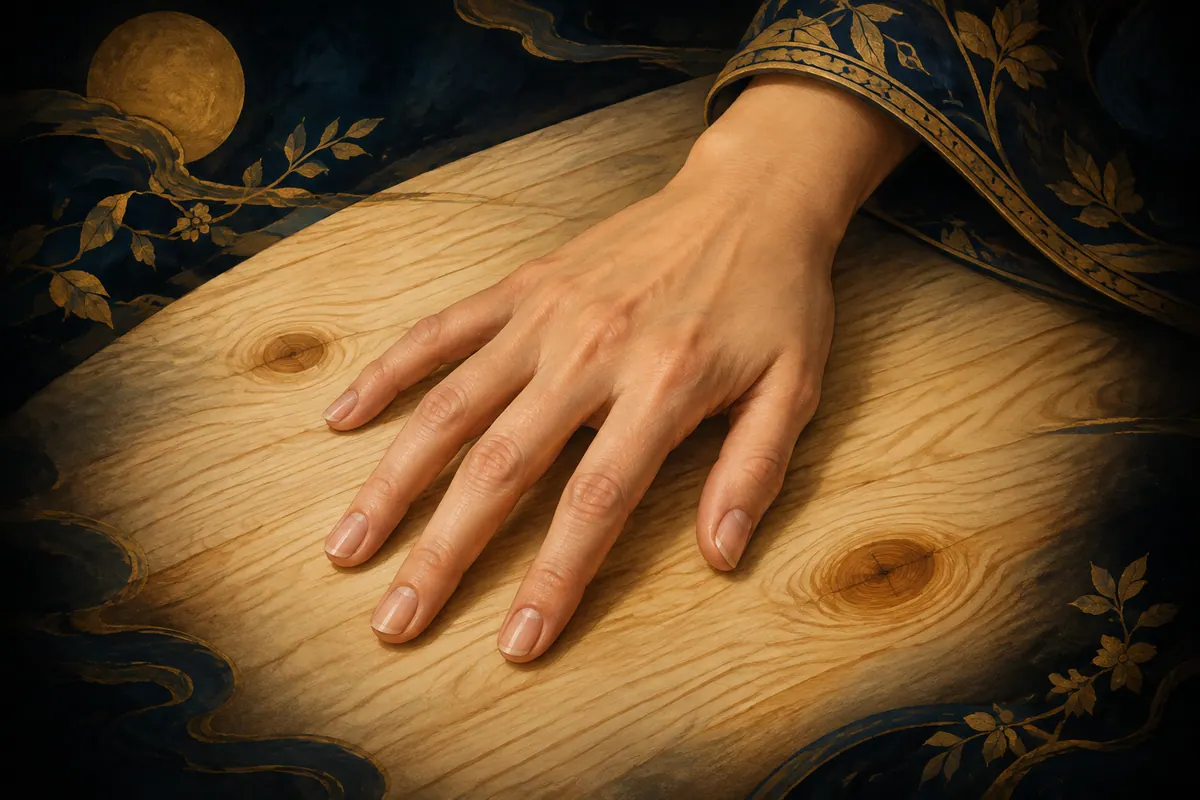
Knock lightly on a wooden object after sharing good news and wish for your good luck to continue. This familiar American gesture gives a hopeful conversation a little extra protection.
Blessings
A project is going well, a new opportunity looks promising, or you have just shared some happy news. Knocking on wood is a way to wish that good course will continue. The gesture is brief enough to slip into an ordinary conversation, giving your hopeful words a little ritual of their own.
A wooden table, chair or small object can be your place to tap. Something you already enjoy using makes the practice feel close to daily life. Its appeal is precisely that a wish for continuing fortune can happen right where you are.
How to invite good fortune
- Try it after speaking about something going well or a future you hope will turn out happily.
- Reach for wood and give it a few light taps with your fingers.
- Add “knock on wood” and put a wish for continuing good luck into the gesture.
A gentle touch is another familiar form. Keep the movement easy and conversational. The grain of a tabletop or the warmth of a little wooden keepsake gives your hand something tangible to meet while your thoughts stay with the good things you want to continue.
Find products
Affiliate links — we may earn a commission when you buy through these links.
Origins and history
Tree-spirit stories in different parts of Europe lend the gesture a woodland atmosphere: wood becomes something people approach with a wish for protection. Christian associations with the wood of the cross have also been linked to the custom. Those images give a familiar action a rich background to imagine.
Touching wood appears in children’s play as well. In the British chasing game Tiggy Touchwood, reaching wood gives a player safety from being caught. That little safe place echoes the charm’s hopeful feeling. Today, “knock on wood” belongs comfortably to American conversation, while “touch wood” is familiar in Britain and elsewhere. A nearby wooden object and a short phrase keep the practice wonderfully approachable, turning appreciation for good things into a simple movement of the hand.