| Blessings | Business luck, success and a harmonious finish |
|---|---|
| What you need | Nothing needed |
Clap Tejime for Business Luck and Success / 🇯🇵 Japan
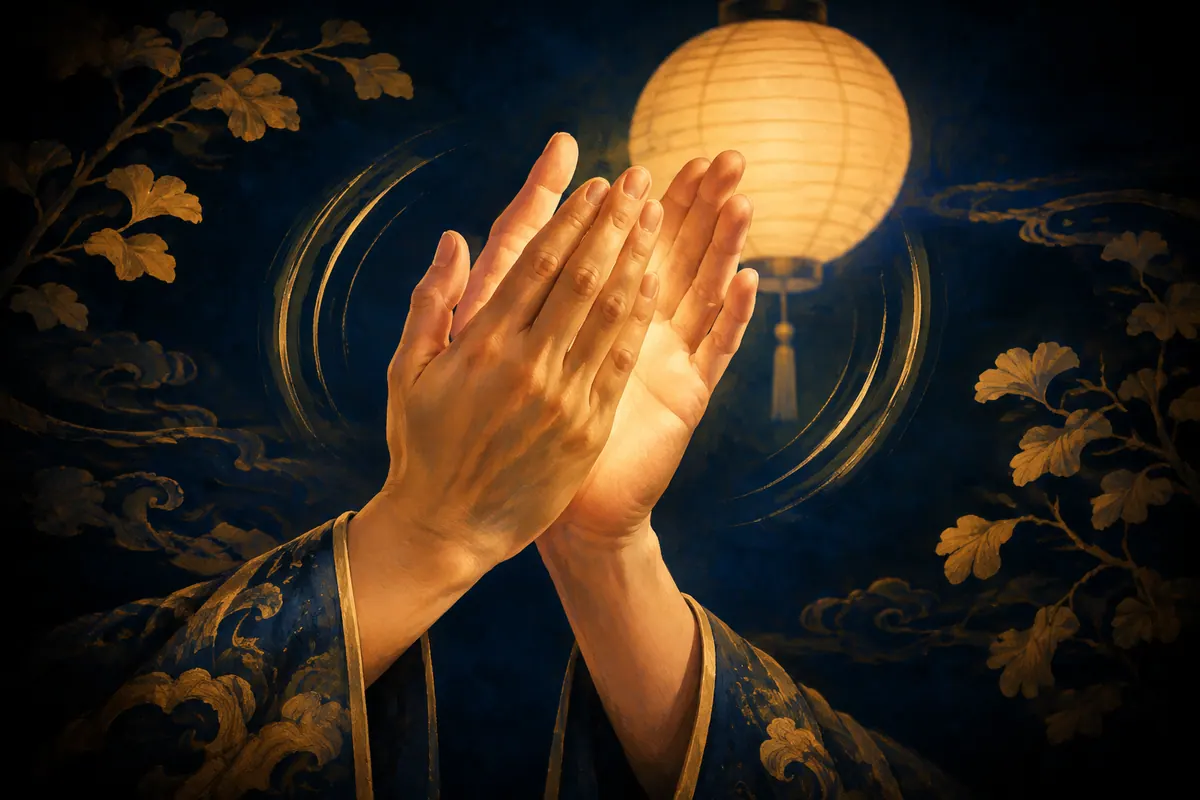
Clap tejime with your team after a job well done and welcome business luck and future success. Japan’s three-three-three-one rhythm gives a shared celebration a wonderfully satisfying finish.
Blessings
Tejime is a Japanese clapping custom for bringing a shared occasion to a happy conclusion. A finished project, a celebration or a successful business gathering becomes a moment to thank the people who helped make it happen. You already have everything the practice needs: your hands and a group ready to join in.
The rhythm carries a wish for things to settle harmoniously and for good work ahead. In Japan it also sounds through markets and business celebrations where people wish for prosperity. The pleasure comes from everyone arriving at the same final clap together.
How to invite good fortune
- The leader announces ippon-jime, the version with one complete sequence, and asks everyone to lend their hands.
- A call of “iyō-o” brings the group together.
- Clap three times, three times, three times, then once: three-three-three-one.
- Give thanks and celebrate the occasion’s happy conclusion.
One run through the pattern is ippon-jime; three runs make sanbon-jime. A single-clap ending has its own name, itchō-jime. Announcing the version first lets everyone share the same rhythm. You can practise the sequence at home before bringing it to a gathering, so the group’s final clap feels especially good.
For a group trying the rhythm together, the leader’s clear introduction is especially useful. Everyone can prepare for the same final beat and enjoy hearing their hands arrive together. Connect the thanks with the occasion you are closing: work completed, time shared, or an achievement celebrated. The common rhythm gives that gratitude a bright ending everyone can join.
Origins and history
The name tejime combines the idea of settling an agreement by hand with bringing something to a close. It celebrates fulfilment and thanks the people who contributed to it. A busy room suddenly sharing a rhythm gives that gratitude a visible, audible form. The celebration belongs to the whole group.
The numbers have a playful meaning too. Three groups of three make nine; adding one final stroke to the Japanese character for nine produces the character associated with “round”. That image suggests a matter reaching a rounded, harmonious conclusion. Edo-style ippon-jime and sanbon-jime are familiar forms, while Osaka and Hakata have their own patterns. Each gives people a way to finish together, carrying a wish for good relationships and the success of whatever comes next.