| Blessings | Prosperity and a plentiful year |
|---|---|
| What you need | Canned black-eyed peas, Cooked rice, Greens, Onion and seasonings |
Eat Hoppin’ John for New Year Prosperity / 🇺🇸 USA
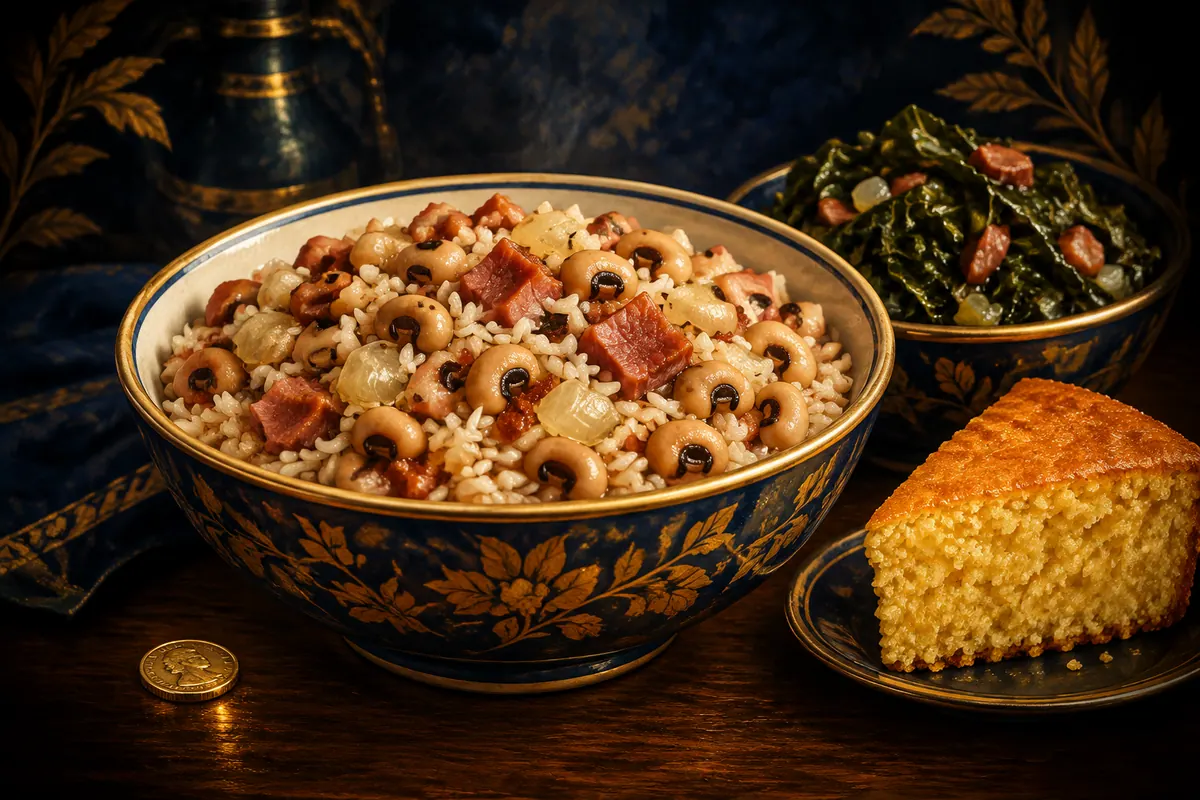
Eat Hoppin’ John on New Year’s Day to welcome prosperity. Black-eyed peas stand for coins, greens for dollar bills: the American South puts its wish for a plentiful year straight onto the plate.
Blessings
Start January with a warm bowl of peas and rice, and give your money wish a delicious place at the table. Hoppin’ John is a Southern favourite built around black-eyed peas, the pale beans with a dark centre. Add leafy greens for the colour of cash and golden cornbread for an extra symbol of wealth. It is a meal made for sharing, with a hopeful meaning attached to familiar, comforting ingredients.
How to invite good fortune
A quick version using canned peas and cooked rice serves four in about 35 minutes. Gather one 15-ounce can of black-eyed peas, two cups cooked brown rice, three-quarters of a pound of collard greens, one chopped onion, one tablespoon olive oil, a quarter teaspoon thyme, two cups water, one teaspoon vinegar, and salt and pepper.
- Cook the onion in the oil for 6–7 minutes.
- Remove the collard stems, chop the leaves and add them with the thyme. Stir for a minute, then add the water, cover and simmer for 5–10 minutes.
- Add the vinegar, drained peas and rice. Cover over low heat for about five minutes, then season.
For an ingredient guide, visit Southern bean producer Camellia’s official website. Its blackeye peas are dried; for this roughly 35-minute version, choose canned or already cooked peas through the ingredient links below. Spoon the warm peas, rice and greens onto the table together and welcome the year with a meal full of prosperity symbols.
Find products
Affiliate links — we may earn a commission when you buy through these links.
Origins and history
There is an Atlantic journey inside this simple pot. Along the southeastern coast of the United States, Gullah Geechee communities have carried forward West African ways of combining rice and peas. Cooking knowledge met local ingredients, and the dish became part of the everyday food that sustains a household. Small red field peas belong to that tradition; black-eyed peas are now another familiar choice.
The New Year meal gives those ingredients a festive meaning. Peas become little coins, and a comforting bowl becomes a wish for abundance. Even the leftovers get a new name: Skippin’ Jenny, enjoyed the following day. Making the pot stretch celebrates thrift, giving the second helping its own connection with prosperity. That playful change of name is a lovely part of the custom. Cook it for January 1 and you are also sharing a food tradition shaped by inherited skills, local ingredients and generations of family kitchens.