| Blessings | Family harmony and gratitude |
|---|---|
| What you need | Turrón de Doña Pepa, Small plates |
Share Doña Pepa’s Turrón for Family Harmony / 🇵🇪 Peru
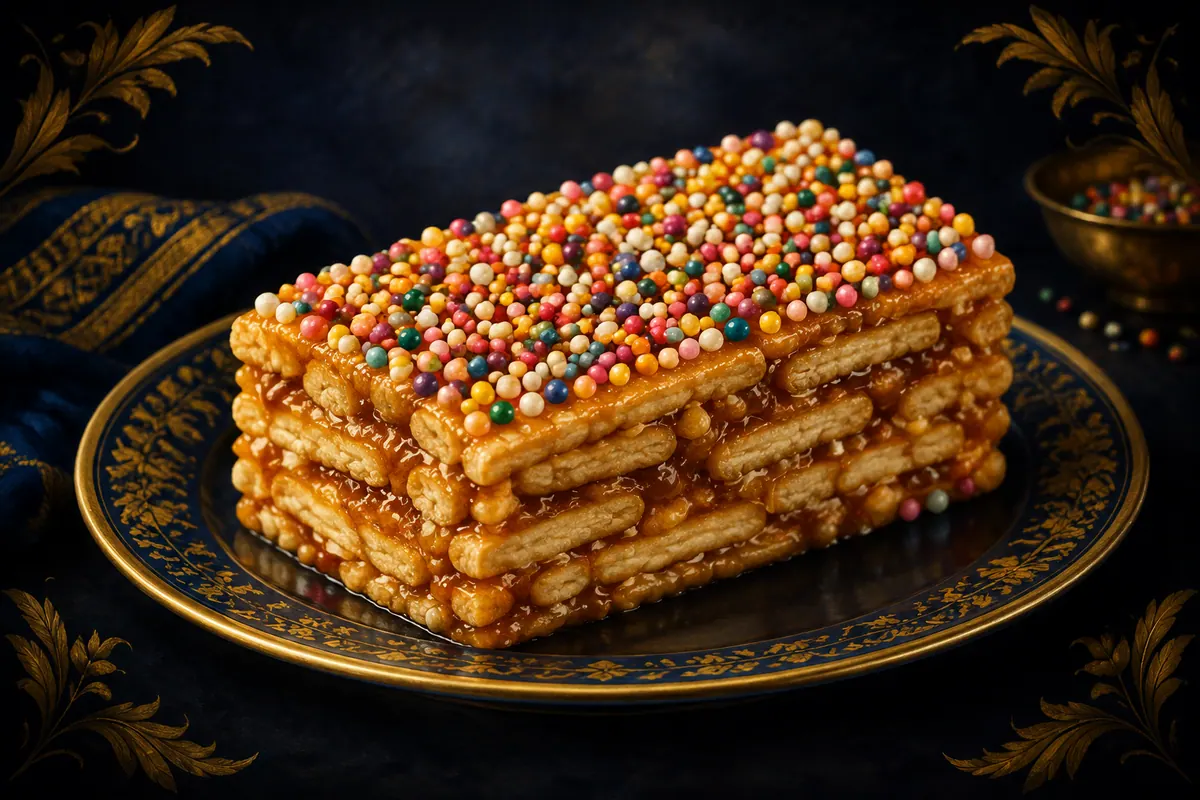
Share a slice of Doña Pepa’s turrón and wish for family harmony. In Lima, this colourful layered sweet is part of October and the celebration of the Señor de los Milagros.
Blessings
The colours arrive first. Small sweets cover the top of Doña Pepa’s turrón, and the cut edge shows pastry sticks held together with syrup. In Lima it is especially associated with October. Bring a piece to the table when you want to thank someone and let everyone see the layers before you cut it. The dish’s association with a gift of thanks gives you a simple reason to tell the person beside you what you appreciate. You might name a meal they made, a visit they arranged or a story they shared. One sentence is enough to start. Then pass the plate so that the person you thanked can offer the next piece.
How to invite good fortune
- Choose turrón de Doña Pepa, or make it ahead with a recipe you trust. Look for the layered sticks, syrup and small coloured sweets.
- Put it on a board and cut small portions. Serve them with the cut sides facing up so the layers are visible.
- Give one piece to a person you want to thank. Tell them what they did and make a brief wish for the people at the table.
- Pass the rest around. If someone asks about the colours or the name, tell them that the sweet is part of Lima’s October traditions.
Find products
Affiliate links — we may earn a commission when you buy through these links.
Origins and history
The turrón belongs to Afro-Peruvian culinary heritage and is closely linked to the October observances of the Señor de los Milagros in Lima. In a story about its origins, Josefa Marmanillo is remembered for returning to offer the dessert in gratitude. The recipe is recognisable by the way the pastry sticks are stacked, the chancaca or cane sugar syrup that binds them, and the colours on top. Cooks use different ingredients in the syrup, which can make one version taste distinct from another. When you serve it at home, the layers are a good place to begin telling its story. The next part can be your own reason for sharing it with the people at your table.