| Blessings | Family unity and warm relationships |
|---|---|
| What you need | Tikoy, Beaten egg and cooking oil if serving it fried |
Give Tikoy for Family Harmony at Lunar New Year / 🇵🇭 Philippines
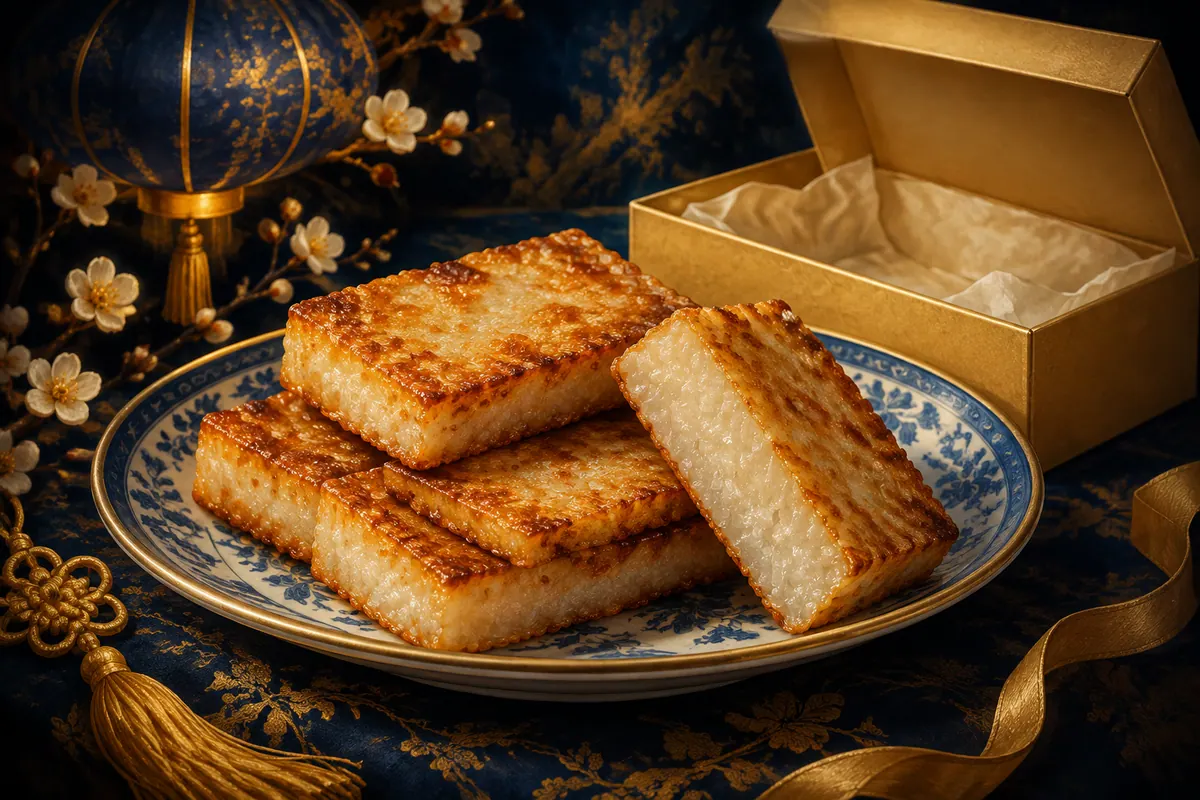
Give a box of tikoy at Lunar New Year and wish the people you love another year together. In Filipino Chinese homes, the sticky rice cake is a sweet way of expressing a family’s wish to stay close.
Blessings
Tikoy is a sweet rice cake associated with Lunar New Year in the Filipino Chinese community. Its sticky texture brings to mind a family that stays together. Give it to people you would like to see more often, or bring it out when relatives are already at the table. The gift lets you put that hope into a familiar exchange of good wishes.
A plate of fried slices is also a pleasant way to share it. The outside can turn golden in the pan, while the rice cake stays soft inside. When you take a piece, the texture that gives tikoy its meaning becomes part of what you taste.
How to invite good fortune
Choose a tikoy rice cake or a boxed version ready to give. Offer it during a Lunar New Year visit, or deliver it to someone whose celebrations you would like to join. Tell the recipient why you chose it: you are wishing for a year in which you keep in touch, eat together again and make time for one another.
To serve it, follow the directions on the cake or your recipe. A familiar Filipino preparation is to cut it into thin slices, dip the slices in beaten egg and pan-fry them until the outside turns golden and the egg is cooked through. Set them on a plate and let people take a piece when the slices are cool enough to eat.
As you pass the plate around, talk about a meal you enjoyed together or pick a date to meet again. The wish becomes easier to remember when it has a flavour and a plan to go with it.
Find products
Affiliate links — we may earn a commission when you buy through these links.
Origins and history
The cake is related to Chinese nian gao and has a place of its own in Lunar New Year celebrations in the Philippines. In Manila’s Binondo, shoppers seek it out as the holiday approaches. Families can receive a box from friends and prepare it at home, so the cake connects the shops of the neighbourhood with the people who will share it.
In Ongpin, the family behind Eng Bee Tin traces its beginnings to a simple market stall known for tikoy. That small detail gives the holiday cake a place you can picture: a shop in Chinatown, with boxes heading home to different tables. The shared idea remains in the texture: the cake sticks together, and the person giving it hopes that the people around the table will stay just as close.